
What an audience actually believes
Most communications work runs in one direction. Decide the message, then go find people to say it to. The harder version starts by finding out what an audience already believes, in their own words, before anyone decides what to say to them.
That is what the Center for Public Justice asked PILLAR for in late 2025. CPJ is a nonpartisan think tank that was preparing to speak into a national conversation it knew was already loud, and the question it brought was better than the one most organizations ask. Before we speak into this, do we actually understand it?
PILLAR is a creative, communications, and marketing agency. Answering that took months of research before a single line of public-facing copy was written.
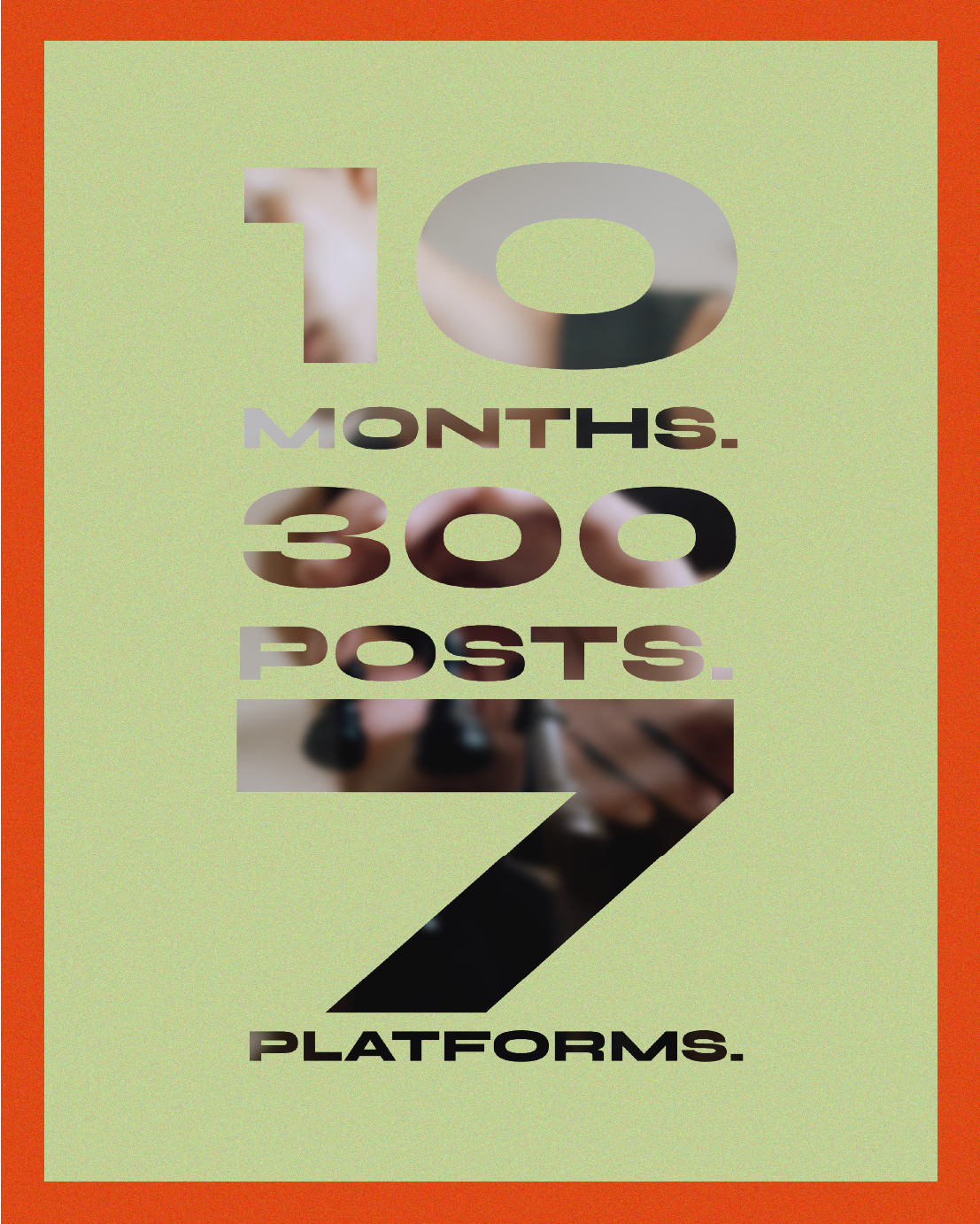
It started with an audit of the ten voices carrying the most influence over the audience CPJ wanted to reach. Half of them were aligned with CPJ's position and half were firmly against it, which is the part most audits skip. Ten months of their output came in, more than three hundred posts, articles, and podcast episodes across seven platforms, read and coded for what each voice said, how they said it, and what their audiences actually engaged with rather than what anyone claimed to care about. Coded content can be plotted, so all ten went onto positioning maps and CPJ could see at a glance who was standing next to whom.
Underneath the audit sat ten one-on-one interviews with people inside that audience, built to find tension rather than agreement, because a conversation that only confirms what you hoped is not research. Every participant stayed anonymous, which is not a courtesy. People say truer things when their name is not attached to them.
The most valuable finding was an absence. One of the things CPJ most wanted to talk about was almost entirely missing from what those ten voices were actually saying, and an absence like that is an opening rather than a problem. Nobody would have guessed it, and that is the case for research in a single sentence.
Then the work moved into building, which PILLAR does not do in isolation. The first messaging framework was a tidy five-step progression, and it did not survive one question: could someone running CPJ's social channels open this seven months from now, with nobody from PILLAR sitting next to them, and build a week of posts out of this strategy? A five-step sequence fails that test, because real content does not arrive in order. So the framework was taken apart and rebuilt, one step kept as the anchor and the other four turned into tools that work in any combination. Everything went to CPJ across three working sessions rather than three deliveries, with drafts open for debate at every turn. PILLAR gives a client its best work early, then spends the rest of the engagement making it better with them. Nobody knows an organization like the people inside it, and a process that does not make room for that leaves the best thinking in the room unused.
What CPJ has now was built against that same test: a strategy and content toolkit, a one-page field guide, a version written to be handed to congregational leaders without a translator, ten finished post designs with every editable source file so a change next spring does not require a phone call, and a training recorded so the next hire can watch it.
Research that stops at a findings deck leaves a client alone with the hardest part. Strategy without research is a confident guess. Anyone can write a confident sentence, and knowing in advance whether it will land is a different job.

To learn more about the Center for Public Justice, visit cpjustice.org.